From an idea to a working tech solution or MVP in two days, scoped to what is realistic for a weekend. No coding required. You walk out with a deployed product that solves one clearly scoped problem, plus a market read, a Safe Harbor valuation, and a patent readiness plan. A room, not an auditorium. Every hand gets raised. Every question gets answered.
We are not promising a new operating system, a launched rocket, or an AI cancer cure by Sunday at 5pm. Some categories of work sit outside what any weekend, with or without AI, can deliver.
Bystander to Builder to Believer AI Workshop · TBD
Every city runs as its own event, intentionally small so the instructors can know every attendee by name, every product gets reviewed, and no one sits in the back row.
We grow by adding new cities, which lets every cohort keep the same close, hands-on experience. When a city fills, we open the next one so more founders get the front-row seat. See every city and date on the upcoming workshops page.
Who This Is For
AI is a global race. The window to compete is open right now.
In every market with internet access, founders are deciding right now whether to build with AI or wait. Some founders, in some cultures, are debating whether it is ethical to build tools that displace jobs in a given industry. Other cultures are not waiting on that debate, they are shipping. Both groups exist. Only one group is showing up in the search results, the app stores, and the funding rounds. The world will not pause the competition while any single market figures out how it feels about AI.
For decades, the cost of building software was a moat that favored capitalized companies, large engineering teams, and long timelines. AI dissolved that moat. A small operator with the right toolkit can now build, deploy, and compete on capability rather than headcount or runway. The door that used to be closed to small business is open. Bystander to Builder to Believer is for the people who walk through it before it narrows.
Sample Deliverable · Case Study
Semantic Vision. Patent pending.
Semantic Vision is an AI-powered personalized educational narrative platform. Instead of giving every child the same book, it generates a unique story for each child, influenced by the child's culture, faith, language, strengths, weaknesses, interests, and goals. Six stakeholder portals. Twenty-plus languages. An audio memories library that preserves a child's reading journey for life.
“If glasses are for your eyes, words are vision for your mind.”
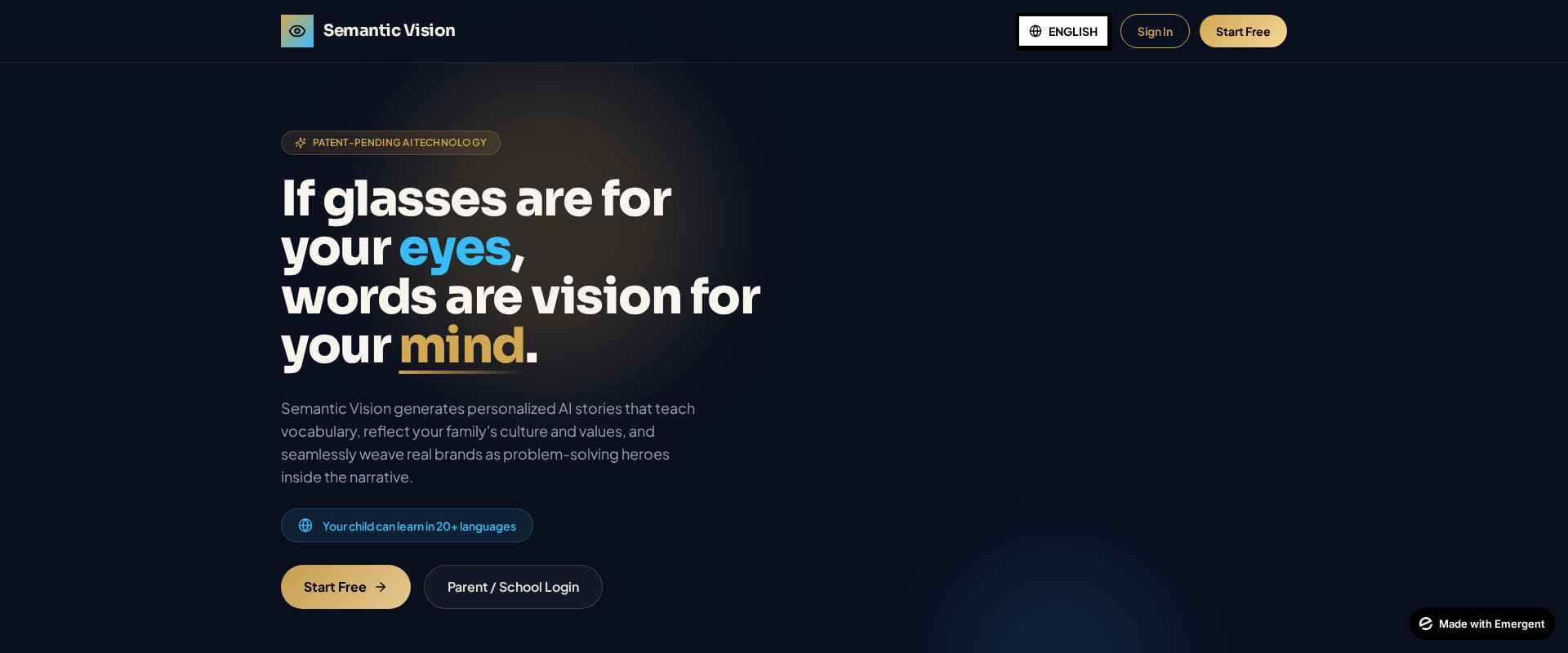
Public Landing Page
Patent-pending AI technology, multi-role entry, twenty-plus languages.
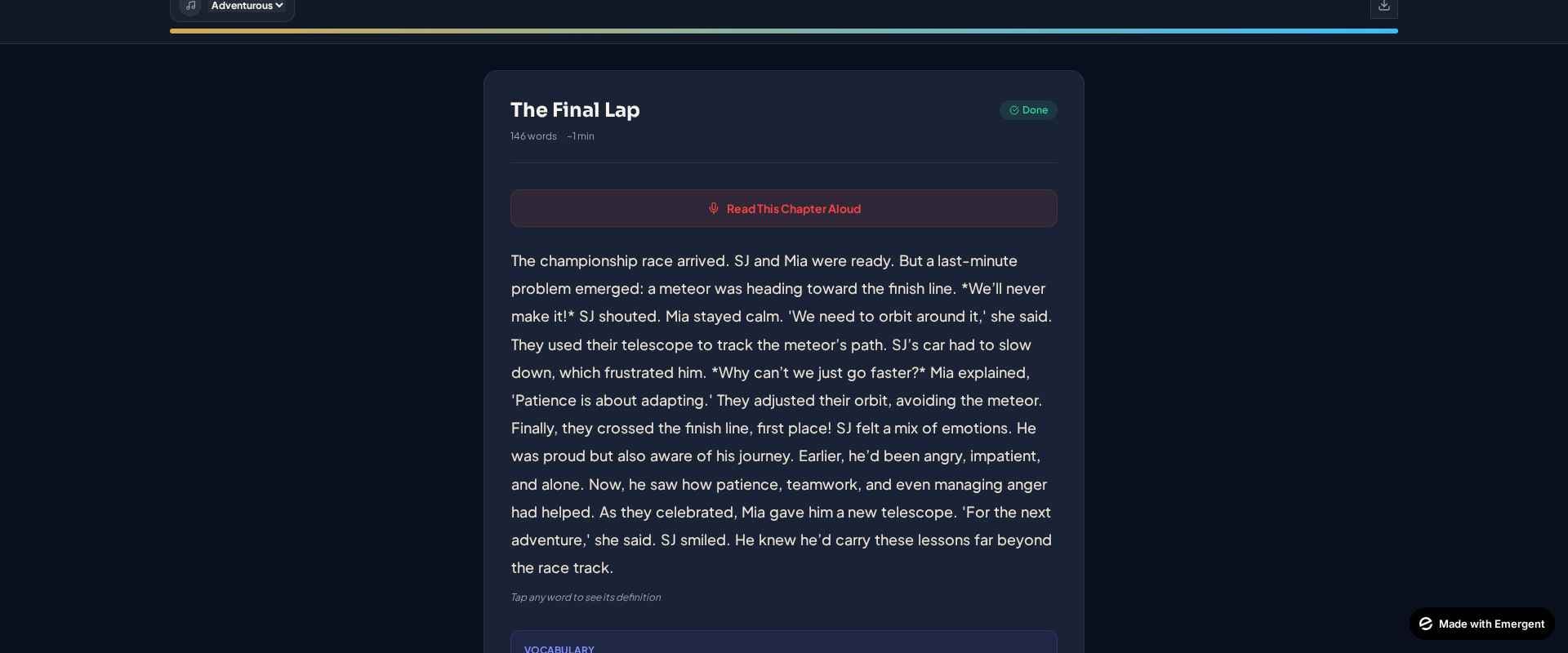
Narrative Reader
AI-generated story with the child as protagonist, Read-Aloud recording, comprehension checks.
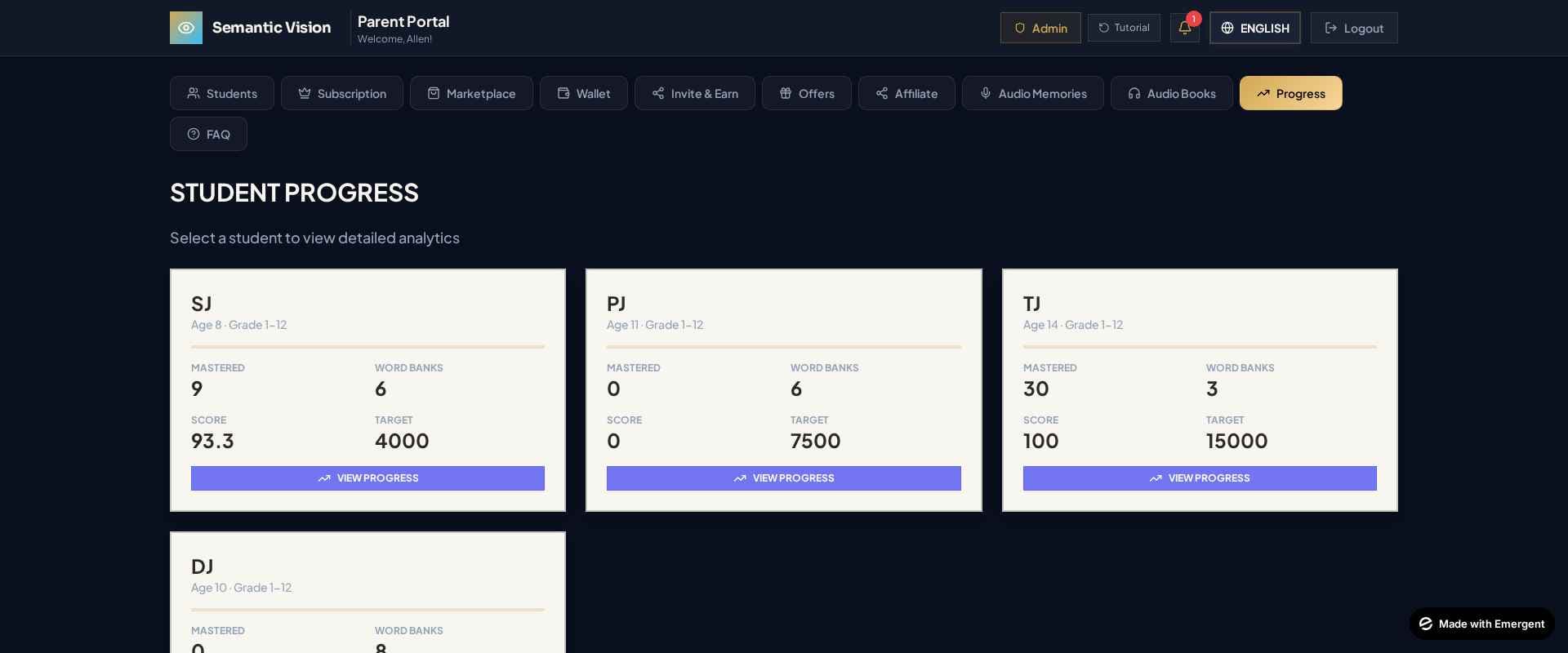
Student Progress Dashboard
Mastered vocabulary, Agentic Reach Score, biological vocabulary target per child.
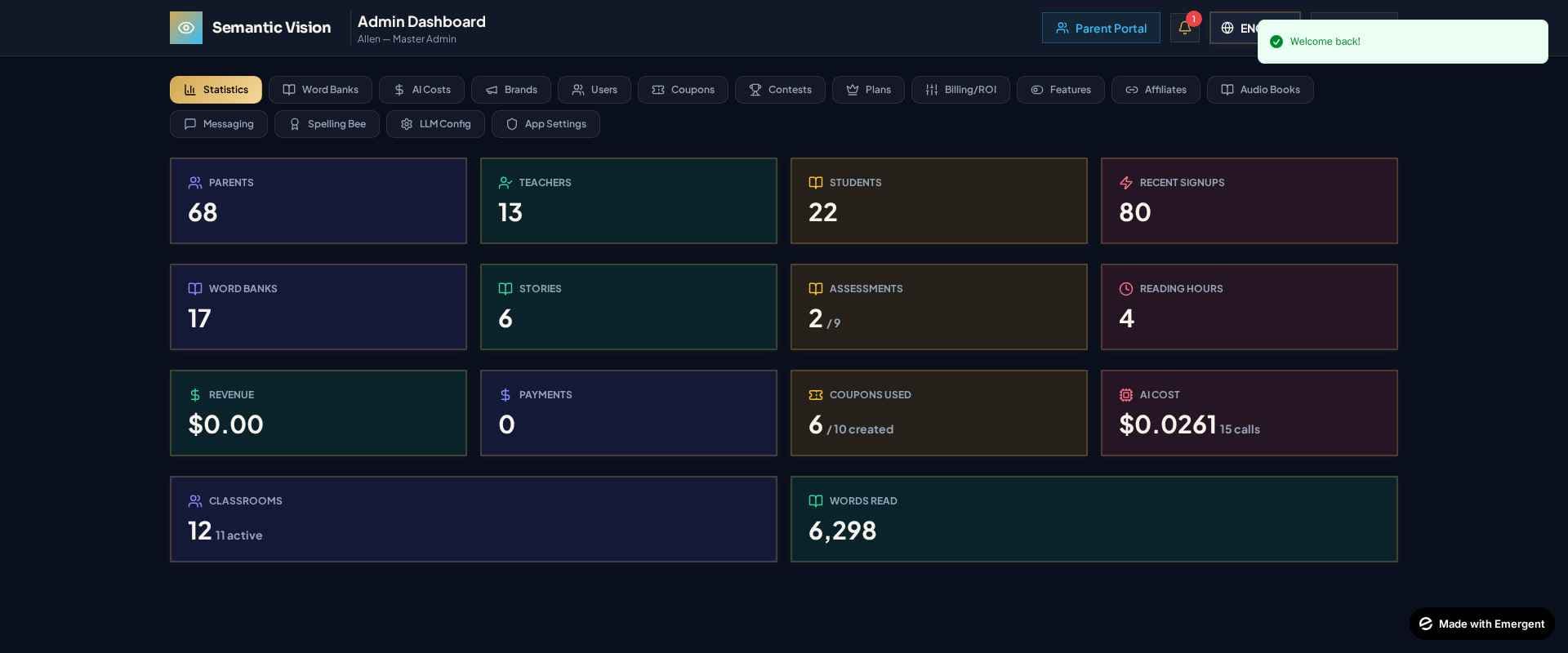
Admin Statistics Dashboard
Full platform control. Users, content, AI costs, revenue, classroom sessions.
6
Stakeholder portals
20+
Languages supported
60/30/10
Vocabulary distribution
Semantic Vision was built by the Opportunisee team using the same AI-native methodology we teach in this workshop. Two days of the From Bystander to Builder curriculum puts you on the same path.
Real Talk From a Client
“I am not an actor.”
Peggy hired a vendor whose stack was capped at 35 users and committed to two more years of payments. Within 90 minutes of meeting Allen, the team found the problem. Her count of total savings, on camera in her own words: at least $50,000. Less than two minutes of unscripted video, taped on her phone, no PR department.
“He saved me at least $50,000. Without them teaching me, I don't know where I'd be today.”
Peggy Everett
Movie Producer · Entrepreneur
Building a video enterprise to amplify voices that have been denied access. Peggy is the same client featured in the consulting case study, the one whose vendor stack was capped at 35 users. After 90 minutes with Allen, she rebuilt on her own platform with our coaching.
Your Instructors
Who is at the front of the room.
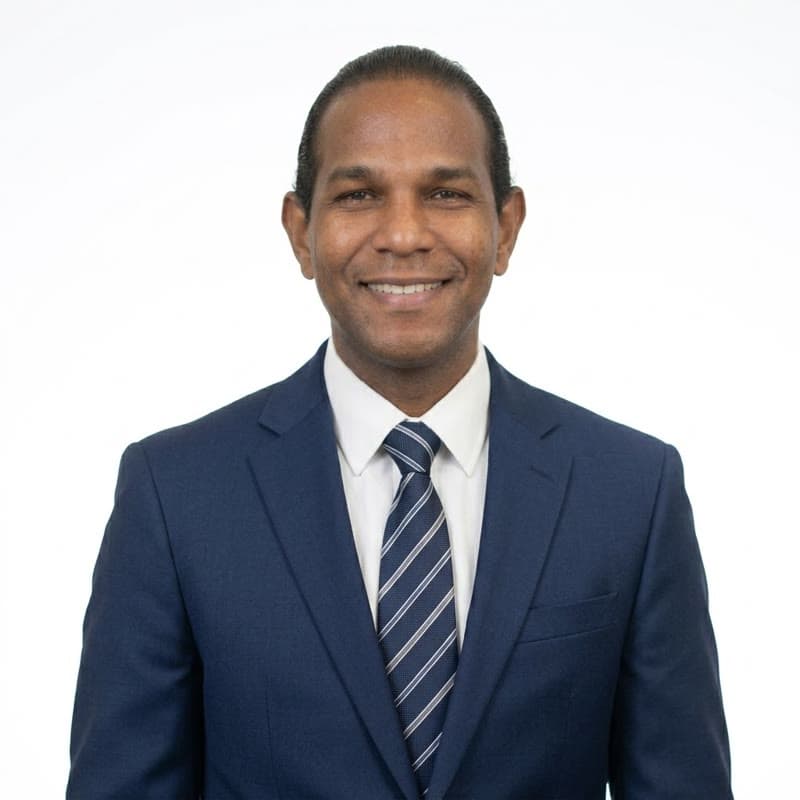
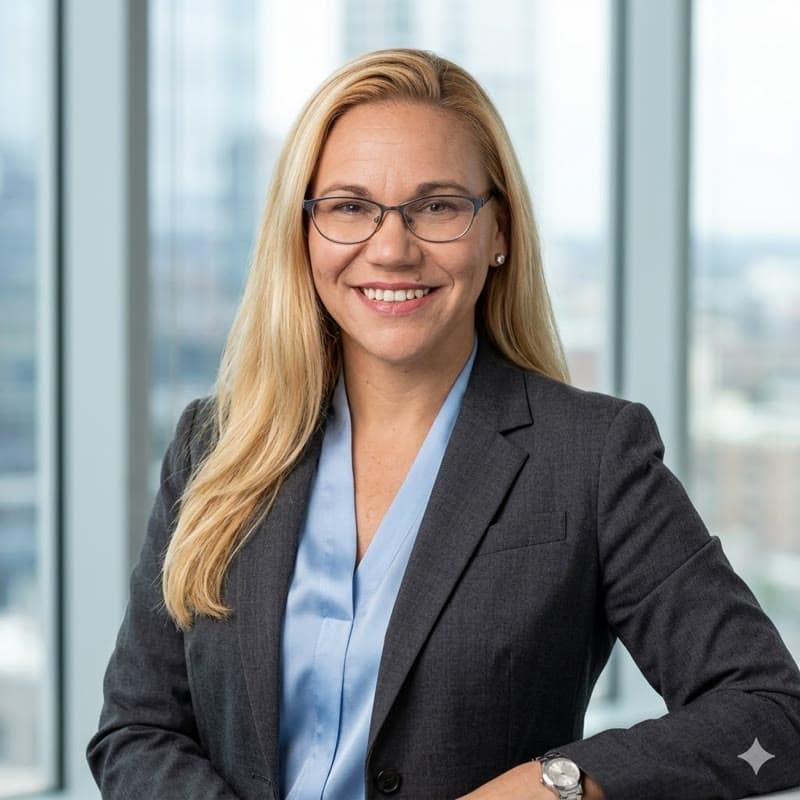
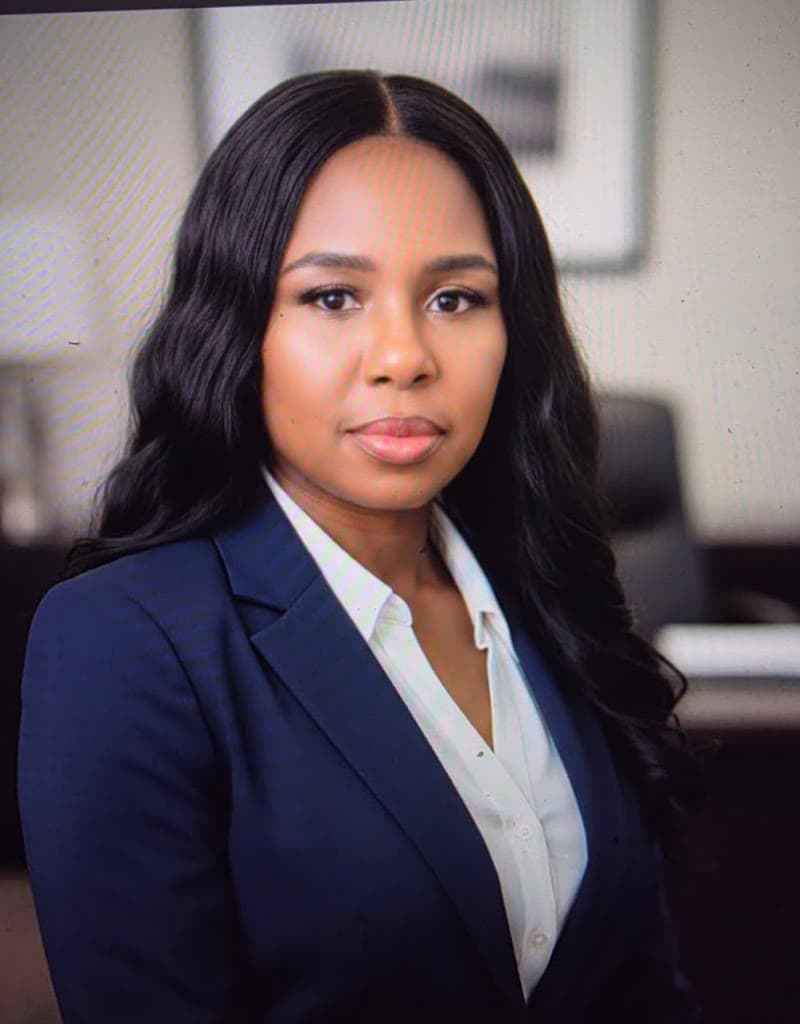
Three operators teaching the work they actually ship. Not theorists. Not professional speakers. Builders.
Co-founder · CEO
Allen Johnson
Built Semantic Vision (patent pending) and a small set of in-house AI tools that are patent pending. CEO of Songs for Centuries Inc. (Nasdaq Private Markets). A decade plus operating across events, music, real estate, and media. Architected the AI-native methodology this workshop teaches.
Co-founder
Dawn Johnson
COO of Songs for Centuries Inc. (Nasdaq Private Markets). Nonprofit manager, entrepreneur, and music industry professional. The translator-in-chief who turns ideas in notebooks into shipped products. A continued avid learner holding master's degrees in Entertainment Business, Technology and Entrepreneurship, and Leadership / Management. Believes this new age of AI will impact every industry and that this is the era for opportunity. Teaches the path from “I have an idea” to “I built it myself”, without a developer, a subscription, or another year of waiting.
“Now I build it myself. Once. No subscription. No developer fee. No waiting.”
Brand & Experiential
Lori Cole
Decades of brand activation and experiential marketing for Jaguar, Microsoft, Coca-Cola, AT&T, Nintendo, Pepsi, Levi's, and more. Tour operations expert who has run nationwide campaigns from a 50-city live entertainment tour to modern experiential programs. Teaches go-to-market and brand activation in the workshop.
Two days is a real timeline. We are not promising you can build the next operating system, replicate Salesforce, or ship a fifty-feature SaaS by Sunday at 5pm. We are promising that you will leave with a working, deployed product that solves one clearly-scoped problem end to end. That is the bar. We hold the line on it because we ship with the same methodology inside our own companies.
Two days is enough to ship
✓A deployed MVP that real users can visit. If your idea is protectable it ships behind a protected URL until filing is in place. If you choose not to protect it, it ships at a public URL.
✓One clearly-scoped problem solved end to end
✓Real auth, real database, real payment integration
✓A landing page, MVP SaaS, AI tool wrapping one workflow, booking flow, marketplace MVP, or PWA
What may not fit in two days
AI keeps moving the line on what is realistic in a weekend. We will push as far as the tools and your scope allow. The categories below have historically required more time than one weekend can give.
✗A new operating system, browser, or platform infrastructure
✗Salesforce, Shopify, or any multi-year competitor feature-for-feature
✗A fifty-feature SaaS in beta-ready state
✗Training a foundation model from scratch
✗Anything that requires custom hardware, regulatory clearance, or a year of UX research
The Real Test
Can anyone use your product to solve the problem it was built to solve?
If yes, you shipped. That is the bar. Not lines of code. Not feature count. Not how impressive the README sounds. Whether anyone can use what you built to do the job it was designed for.
“Measuring programming progress by lines of code is like measuring aircraft building progress by weight.”
The Arc
From Bystander → to Builder → to Believer.
Stage 1 · Bystander
You hold an idea you have never shipped. You watch other people build. The shift is happening with or without you.
Stage 2 · Builder
Two days. You walk out with a deployed product. If your idea is protectable, it ships behind a protected URL until filing is in place. If you choose not to protect it, it ships at a public URL. Either way, it works.
Stage 3 · Believer
Anyone can use what you made to do the job it was built for. That is the line.
The Curriculum
Seven modules.
Every module maps to work we do inside our own companies. We condense it into two days because we teach with AI, not around it.
We help you set up the same AI-native development environment we use to build and deploy inside our own company. By the end of the session your workstation is ready to build.
Go from idea to a working product without writing code line by line. You describe what you want in natural language. The system helps you build it. You ship it. This approach is also known as Vibe Coding.
Prompting is not a trick. It is architecture. We teach you to design AI systems that are multi step, self correcting, and production ready.
A full stack walkthrough. How to build the front end, how to wire the back end, and how to deploy so the product is live and scalable on day two.
Before you build, you validate. We teach the search data and content strategy methodology we use to read real demand. Sometimes the demand is already obvious in the data. Other times, like Henry Ford with the automobile or OpenAI with ChatGPT, you are building a category the market does not yet know it wants. Building ahead of demand is valid, even essential, when you are creating something genuinely new. We help you tell the difference, so you know what story to tell when you launch. Some attendees build a product for an internal workflow and never plan to sell it, which is also valid. The validation step still matters to make sure the tool solves the real bottleneck.
Not every idea is patentable, and not every attendee should file. We teach what a provisional application requires, how to write technical specs that become claims, and how to prepare the filing. We will not push anyone to file prematurely. A patent filed too early, with incomplete claims, is worse than no filing. Attendees whose work is genuinely protectable and scope-complete can move forward with filing after the workshop, not in a rush.
We walk through the Section 409A Safe Harbor valuation, using the term the statute itself uses. The point is not only compliance. Most founders dismiss their own idea because they do not understand its real market potential. A Safe Harbor valuation gives you a realistic, defensible number for the value of the IP you created in the workshop, so you can see what your work is actually worth. That number changes how founders raise, price, and sell.
Alumni Pass · Bring your next idea back
Builders ship more than once.
The two-day promise is firm: every first-time attendee leaves with a working product. That part does not require a second pass.
The work you ship at this workshop is yours. Keep building it. The Alumni Pass is the open door back into the room when you are ready to keep iterating, capture new market knowledge as AI evolves, or bring a brand new idea to the table. Same methodology, evolved curriculum, a new room of founders to build alongside. We will be here to help you reach the next goal.
This is not a remediation pass. The methodology works the first time. Builders just don't stop building.
Two ways to come back
Mentor seat
You sit in on the new cohort, share what you have shipped since, and answer questions from the next class. Your presence raises the bar for everyone in the room. Typically no additional fee.
Builder seat
Full workstation. You bring a new project and ship it alongside the cohort over the same weekend. A small reseating fee may apply depending on demand.
Subject to room capacity. When demand allows, we expand the room rather than turn alumni away. Each city's exact return terms are emailed to alumni the day before the event.
The Fit
Who this is for.
✓Aspiring founders with an idea and no tech background
✓Non-coders, including people who never imagined themselves building software
✓First-time founders or career changers without formal business experience
✓Entrepreneurs ready to validate and sharpen their concept
✓Small business owners building tech enabled solutions
✓Enterprise teams sending their people to learn the how-to
✓Curious learners of any age, including children when a parent signs the workshop NDA on their behalf
✓Anyone who wants to go from idea to investor ready, fast
✗People who want someone else to build it (see our consulting arm)
Your IP Is Yours
You walk in with an idea. You walk out with it still yours.
Most workshops put the burden of trust on the attendee. We put it on ourselves. Our default position is the protective one: keep your inventive detail to yourself. The group room is for problem framing, methodology, and market discussion, not patentable specifics. If you choose to share inventive detail with another attendee, we recommend an NDA between the two of you and we provide a template you can use on the spot. Anything you share with Opportunisee in a 1:1 session is automatically covered by an NDA between you and our company. Silence is protective by default. Disclosure is your choice. Every disclosure has a paper trail.
Protected
We are your consultant
Inside the workshop, Opportunisee is acting as your consultant. Our job is to help your idea become a real product. We do not own your idea. We do not claim a stake in it. We are paid for the workshop seat and the help we provide. That is the whole arrangement.
Protected
Your idea stays your idea
By default, every invention, product, brand, and asset created at the workshop belongs entirely to the attendee who brought or created it. Provisional patents filed during or after the workshop are filed in your name. We do not list ourselves as inventors on your work.
Protected
Two-tier disclosure · Your IP, your audience
The 35-person group room is for strategy, problem-framing, methodology, and market discussion. Patentable invention details are reserved for 1:1 sessions with Opportunisee only. You, not the room, choose what depth you share with whom. This dramatically narrows the people who ever see your protectable details, by design.
Protected
Group room rule · Don't pitch your patent
We instruct every attendee, in writing and at the start of every cohort, to keep patentable technical detail out of the group room. We coach you to talk about the problem in the group room, and bring the solution into your 1:1.
Protected
Joint projects require their own agreement
If at any point we both decide we want to build something together, that is a separate conversation and a separate written agreement, signed after the workshop. It never happens by default, by accident, or because you discussed your idea in the room.
Protected
Mutual confidentiality with carveouts
Every attendee signs the same Mutual NDA. Each attendee is responsible to every other attendee for whatever is shared. Standard NDA carveouts apply, independently developed information, publicly known information, and information lawfully held in advance is not covered.
Protected
No non-compete
There is no non-compete clause anywhere in the NDA. We do not restrict where you work, who you build with, what you launch, or what industries you compete in after the workshop. Your career and your future products are entirely your own.
Protected
Reviewable in advance
The NDA is sent to you automatically the moment you register, by email. Read it carefully, run it past your own attorney, ask us questions. Nobody signs anything at the door under pressure.
Event details below are the next scheduled session. The date rolls to the last weekend of each month on its own; admins set the city, venue, and hours per cohort in the admin area.
Date
Saturday October 31 and Sunday November 1, 2026
Saturday hours
9:00 AM to 5:00 PM (optional extended session until 8:00 PM)
Sunday hours
9:00 AM to 5:00 PM
Venue
To be announced
Address
To be announced
City
TBD
Meals
Meal voucher provided for on-premise restaurant or local partner restaurants
Bring
A laptop or a desktop. See FAQ for minimum tech specs.
Full logistics (room assignment, parking, entry instructions) are emailed to confirmed attendees one week before the workshop.
Want this in your city?
Tell us which city you want this in.
Each city runs as its own workshop, capped at 35 seats. Pick your city, tell us how many seats you need, and we notify you the moment we announce a date.
See the full list of cities and how scheduling works on the Upcoming Workshops page.
Register
Reserve your seat.
Secure checkout. Confirmation email is sent immediately. Payment plans are available for every attendee. One week before the workshop you receive prep materials.
Pick a payment option. Your seat is held the moment your first payment clears.
Secure checkout · Stripe · No account required
· The $295 deposit is non-refundable; it holds your seat at the workshop.
· On payment plans, your first monthly charge happens 30 days after the deposit. After that, your card is charged on the same day each month until the balance is paid.
· All plans total $1,495 (or $1,345.50 paid in full with the 10% discount).
· Stripe processes everything. We never see or store your card details.
· You receive a confirmation email immediately after the first charge.
FAQ
Questions, answered.
Thirty five. By design, not by accident. Each city runs as its own workshop, capped at 35. At that size the instructors know every attendee by name, every product gets reviewed, and no one sits in the back row. If a workshop fills, we announce the next city rather than add chairs.
Because the workshop is a working session, not a lecture. Everyone in the room goes through the curriculum together, ships products together, and usually stays in touch after. Bystander to Builder Orlando is the founding event. Bystander to Builder Atlanta and Nashville come next. Each city is its own thirty five seat working room.
No. Every module is taught using AI-native tools. You describe what you want in natural language and the system helps you build it. If you can write an email, you can build here.
A laptop or a desktop, a notebook, and your business idea. Mac or PC. See the minimum tech specs answer below.
Minimum recommended: 16 GB RAM (32 GB preferred), a modern CPU (Apple Silicon for Mac, Intel 10th gen or newer, or AMD Ryzen 5 or newer for PC), 50 GB free disk space, and a stable internet connection. You must have admin rights to install developer tools on the machine. If your setup is older than this, email us before you register and we will tell you honestly whether it will be enough.
Yes. Payment plans are available for every attendee, not case by case. Ask at checkout and we will set you up.
All curriculum, all tools access during the workshop, the patent readiness and filing education session, the Section 409A Safe Harbor valuation session, a meal voucher for the on-premise restaurant or local partner restaurants during workshop hours, and post workshop support materials.
Refund terms are outlined in our Terms of Service. Contact us before registering if you need specifics.
Founded and taught by Allen Johnson and Dawn Johnson, co-founders of Opportunisee and Songs for Centuries Inc.
Only if your idea is protectable and your product scope is complete at the workshop. Every attendee walks out understanding exactly what a provisional patent requires, how to write technical specs that become claims, and how to file.
Two days is a real timeline, and we are intentionally precise about what "working product" means. We mean a deployed MVP at a public URL that solves one clearly-scoped problem end to end, real auth where required, real database, real payment integration where it applies, and demoable in sixty seconds to a real customer. By the end of Sunday, the test is: can a real person you do not know use your product to do the one thing it was built for? If yes, you shipped. We call this the Stranger Test, and it is the bridge between two stages of the brand arc: Bystander → Builder → Believer. The workshop takes you from Bystander to Builder. The Stranger Test takes you from Builder to Believer. We refuse to use lines of code as a metric because lines of code rewards verbosity, not value. We measure by whether a stranger can finish the job the product was built to do.
No. Two days is not enough to build a new operating system, browser, or platform infrastructure; not enough to replicate Salesforce, Shopify, or any multi-year competitor feature-for-feature; not enough to ship a fifty-feature SaaS in beta-ready state; and not enough to train a foundation model from scratch. If your idea requires any of those, we will tell you on Saturday morning and help you scope a focused first release that actually fits the weekend. Most ideas worth shipping have a one-problem version that fits a weekend, and that is what we ship.
Yes. Every attendee walks out understanding how a Section 409A Safe Harbor valuation is prepared, using the terminology the statute itself uses. Attendees who complete the full product scope and valuation inputs during the workshop can carry a defensible, investor ready number out of the weekend. The real value is perspective. Most founders undersell their own idea because they have never seen its market potential measured.
Yes. Every attendee, every instructor, and every staff member signs the same Mutual Workshop NDA at registration. The NDA is intentionally founder-friendly and is sent to you automatically the moment you register, by email, so you have all the time you need to review it with your own attorney before the workshop. There is no non-compete clause anywhere in it. The full text is available to read at opportunisee.com/nda before you register. Inside the workshop, Opportunisee acts as your consultant, the NDA reflects that, with mutual confidentiality obligations running between every person in the room.
No. Inside the workshop, Opportunisee acts as your consultant; we do not own your idea, we do not claim a stake in it, and we do not list ourselves as inventors on your work. Your invention, your product, your brand, and any provisional patents that come out of the workshop belong entirely to you. If we both later decide to build something together, that is a separate conversation and a separate written agreement after the workshop, never by default and never by accident. The Mutual Workshop NDA at opportunisee.com/nda spells this out in writing.
Yes, and most founders do not learn this until it is too late. In 1855, Samuel Barnes invented an improved steel for women's corsets. He gave a sample to a woman who would later become his wife. No paperwork. No "keep this secret." Just "here, try this." She wore them privately for eleven years. In 1866, Barnes filed for a patent. The U.S. Supreme Court threw it out. The case is Egbert v. Lippmann, 104 U.S. 333 (1881), and it is still controlling law one hundred and forty-five years later. Justice Woods wrote: "If an inventor, having made his device, gives or sells it to another, to be used by the donee or vendee, without limitation or restriction, or injunction of secrecy, and it is so used, such use is public, even though the use and knowledge of the use may be confined to one person." One person. No crowd. No announcement. Still public disclosure. Still patent-destroying. This is the public-use bar of 35 U.S.C. § 102(a)(1): an invention cannot be patented if it was "in public use, on sale, or otherwise available to the public before the effective filing date." The U.S. provides a one-year grace period under 35 U.S.C. § 102(b)(1) for the inventor's own disclosures, but most other major patent jurisdictions (Europe, Japan, China) follow absolute novelty, any prior public disclosure destroys patent rights internationally with no grace period. Every time you show your idea to a developer, a designer, a potential partner, an investor, or even a friend without a confidentiality obligation in place, you may be starting your patent clock or killing your trade secret. The Bystander to Builder workshop teaches the verifiable steps courts require to prove you protected your rights: how to impose confidentiality obligations in writing, how to document them so the paper trail survives litigation, how to structure disclosure to the smallest necessary audience (Two-Tier Disclosure, group room is strategy, 1:1 is invention details), and how to file a provisional patent before going public. That is why every attendee, every instructor, and every staff member signs the same Mutual Workshop NDA at registration. (General information, not legal advice, confirm with your own patent attorney for your specific situation.)
By structure, not just by signature. The most important rule of the workshop is what we call Two-Tier Disclosure. Tier 1, the 35-person group room, is for strategy, problem-framing, methodology, and high-level idea description; it is NOT where patent claims or technical inventions get disclosed. Tier 2, scheduled 1:1 sessions with Opportunisee staff only, is where invention-level detail belongs. Every attendee is instructed in writing, at the start of every cohort, to keep patentable detail out of the open room. The Mutual NDA covers everything that does get shared, but the safer position is that 34 strangers never see your protectable material in the first place. The disclosure pool for your patentable IP is therefore you plus a small named Opportunisee consulting team, not the full room. You control depth: you decide what to share with whom, and we coach you through that decision. The full architecture is documented at opportunisee.com/nda.
Yes, but to be clear, the Alumni Pass is not a remediation pass. The two-day promise stands: every first-time attendee leaves with a working product, and the methodology works the first time. Alumni come back not to repeat what they already learned, but to ship the NEXT idea. AI evolves, markets move, and most builders have a second product they want to take to a fresh cohort. There are two ways to return. Mentor seat: you sit in on the new cohort, share what you have shipped since, and your presence raises the bar for everyone. Typically no additional fee. Builder seat: full workstation, you bring a new project, and you ship it alongside the new room over the same weekend. A small reseating fee may apply depending on demand. Both are subject to room capacity; when demand allows, we expand the room rather than turn alumni away. Each city's exact return terms are emailed to alumni about 30 days before the event.